On April 18, the final of the 6th Shanghai University Open Data Analytics Challenge was held at the University of Shanghai for Science and Technology (USST). The competition was jointly organized by Shanghai MBA Education SupervisoryCommittee, Technical Innovation Committee of the Shanghai Engineering Management Society, Shanghai Systems Engineering Society, Shanghai Nonlinear Science Research Society, and Shanghai Big Data Alliance. It was co-hosted by the Department of Artificial Intelligence of the Business School at USST, the E-Commerce Development Research Institute, and the Brain-Like Computing Laboratory of the Intelligent Emergency Management School. Special support in the form of computing power quotas and authentic open data was provided by the Shanghai Public AI Computing Power Service Platform and the USST Library, respectively.
At the opening ceremony, Zhao Laijun, on behalf of the organizers, extended a warm welcome to all guests, judges, and participating faculty and students. He noted that data elements have become a key engine driving new types of productivity, and the Business School is actively aligning itself with the artificial intelligence development trend. The School is fully committed to creating an “AI + Management” interdisciplinary talent cultivation system. Zhao expressed the hope that the competition would help deepen industry-education integration and drive data empowerment across industries.
Subsequently, Li Genguo, Director of the Shanghai Supercomputer Center, Gao Yan, Vice President of the Shanghai Systems Engineering Society, and Fan Chongjun, Director of the E-Commerce Development Research Institute and the department head of Artificial Intelligence at the Business School, all shared their perspectives on the significance of the event from the angles of industry-education integration, system engineering methods, and digital economic development.
Zhu Xiaodong, Vice Dean of the E-commerce Development Research Institute, Secretary of the AI Department's Party Branch, and Secretary-General of the Competition Organizing Committee, reviewed the development of the competition over the past six years. He noted that the competition has consistently aligned with national strategies, focusing this year on the integration of AI and data elements. The participation and collaboration across universities have significantly increased, with the competition's influence continuing to grow.
Furthermore, this year, the competition provided a higher-level platform for the academic conversion of excellent results. Teams that received the Grand Prize or First Prize will have the opportunity to refine their work into English papers, which will be recommended for publication in international journals indexed in databases such as CNKI and Google Scholar. This initiative not only enhances the academic value of the competition but also provides an important avenue for improving students' research abilities.
The theme of the 6th competition was “Connecting Everything with Intelligence, Creating the Future with Data”, emphasizing the era of AI and data element integration. It focused on fields such as smart terminals, industrial internet, digital content, financial services, healthcare, and urban governance, encouraging teams to analyze and innovate based on real data scenarios. The goal was to explore the release of data value and the path to technology implementation. Since the start of the competition, more than 50 teams registered. After the expert preliminary review, 27 teams from 18 universities advanced to the final. They were divided into four groups for presentations. The participating teams explained their work across various stages, including data collection, processing, modeling, visualization, analysis, and application, demonstrating their strong data analysis capabilities and innovative ideas.
The competition invited experts from institutions such as Huawei Technologies Co., Ltd.’s MindSpore Ecosystem Innovation Center and the Shanghai Artificial Intelligence Laboratory to participate in the judging and provide guidance. The judging panel conducted a comprehensive evaluation of the projects based on factors such as technological innovation and application value, and ultimately selected the winners of various awards and completed the award ceremony.
As one of the key highlights of this year’s competition, the Shanghai Supercomputing Center provided computing power resources valued at approximately RMB 800,000. Relying on the “Shanghai Artificial Intelligence Public Computing Power Service Platform,” this support offers strong guarantees for the subsequent optimization and practical implementation of award-winning projects. It also represents a significant achievement of the ongoing Party-building collaboration between the Business School and the Shanghai Supercomputing Center.
This competition is not only a high-level data analysis contest but also an important practical vehicle for USST in advancing the comprehensive reform of its “moral education and talent cultivation mechanism”. By promoting learning and innovation through competition, it effectively integrates knowledge transmission, capability development, and value guidance.
Looking ahead, the Shanghai Open Big Data Analysis Challenge for Universities will continue to deepen its open-sharing and collaborative innovation mechanisms, and cultivate more outstanding talents to serve the development of the national digital economy and artificial intelligence strategy.
Other distinguished guests attending the competition included Jia Tingmeng, CTO of the Shanghai Ascend Ecosystem Innovation Center at Huawei Technologies Co., Ltd.; Ge Jiaye, Head of the Sinan Large Model Evaluation Product at the Shanghai Artificial Intelligence Laboratory; Zhang Zheng, Vice Dean of the Sino-British College at USST; Liu Weiwei, Vice Dean of the Business School; Yu Tingting, Deputy Secretary-General of the Shanghai Nonlinear Science Research Society; as well as leaders and representatives from the organizing and supporting institutions and members of the judging panel.
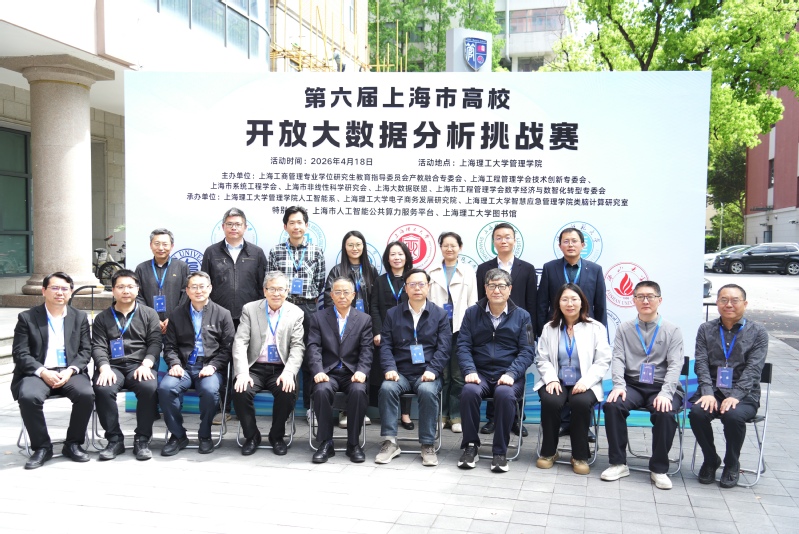
Group Photo
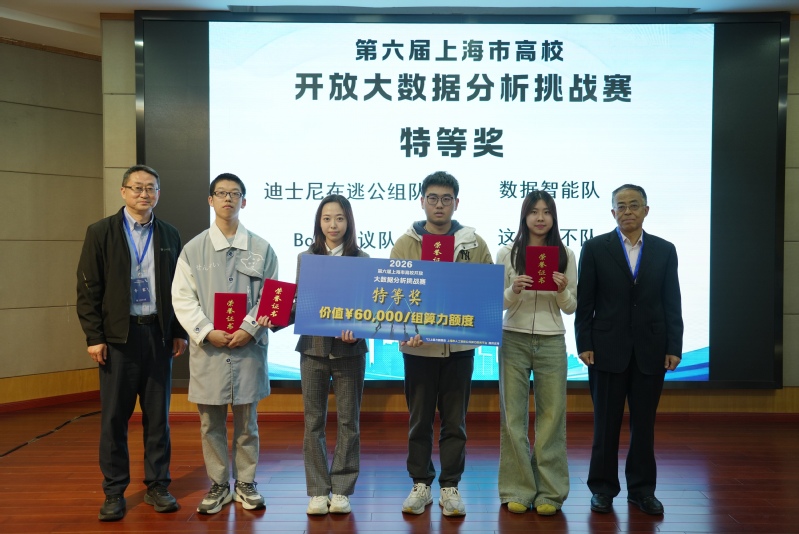
Grand Prize
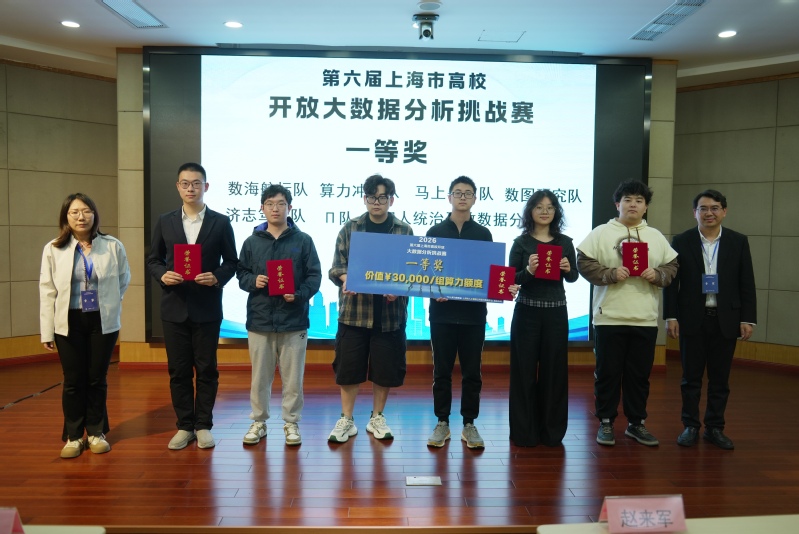
First Prize
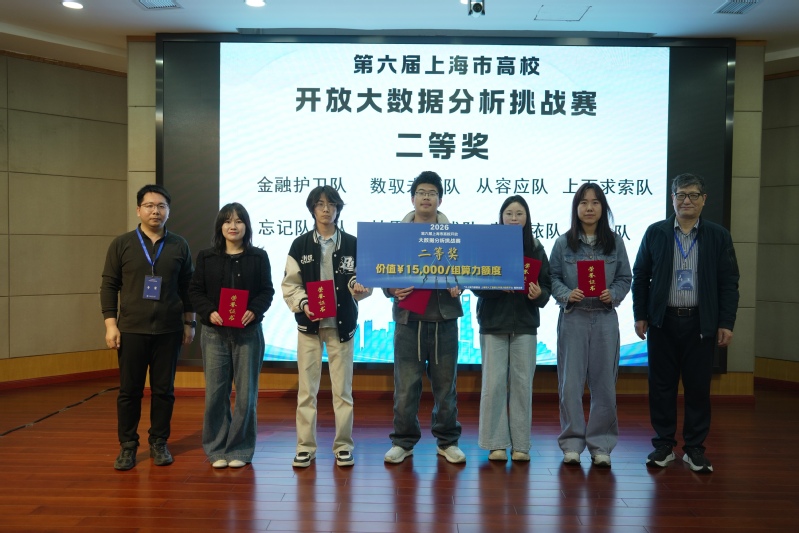
Second Prize
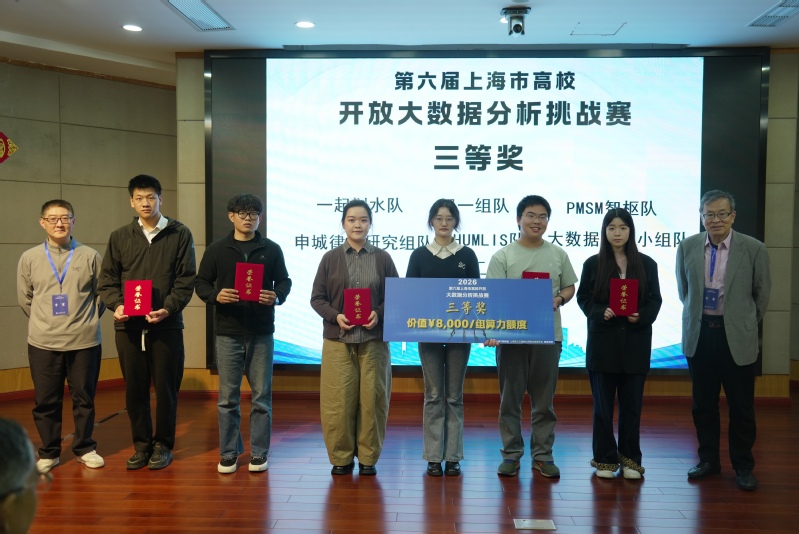
Third Prize
Translated by Chen Yunling
Reviewed by Liu Weiwei, Wei Xin