From April 12 to 19, faculty members and students from the Professional Degree Education Center of the Business School visited Kyung Hee University for an overseas study program themed “Insights into Enterprises, Society and Culture in an Era of Transformation.” The visit was led by Professor Tian Fa, Director of the Master of Taxation (MT) Program, and Yuan Jingjing, Admissions Supervisor of the Center.
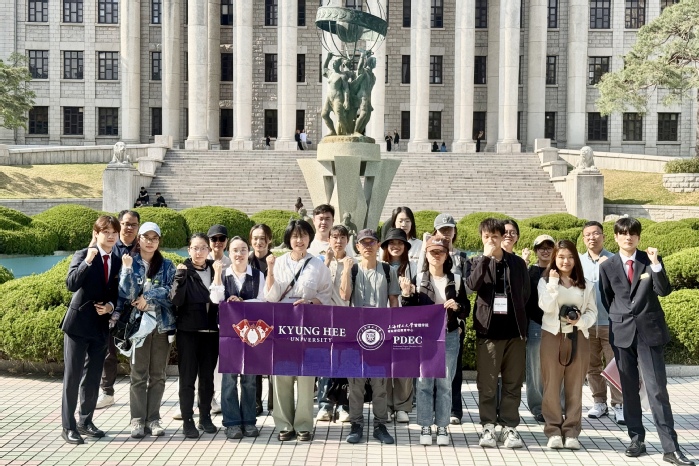
Group Photo of the Visiting Delegation
The welcome ceremony was hosted by Professor Li Yannan, Chair and Director of the CMBA Program at the Graduate School of Technology Management of Kyung Hee University. During the ceremony, Dean Jung Won-seok delivered remarks expressing sincere expectations for deeper academic interaction and people-to-people exchanges between the two universities. On behalf of the Business School of University of Shanghai for Science and Technology, Professor Tian Fa extended heartfelt thanks for the thoughtful arrangements made by Kyung Hee University. The two sides exchanged commemorative gifts and took group photos.
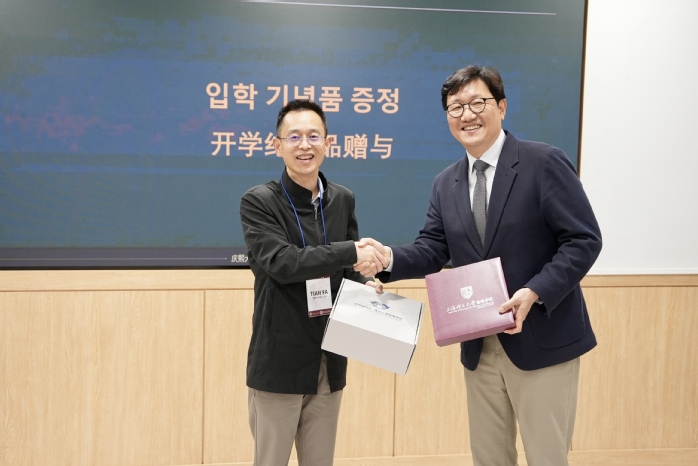
Souvenirs Exchange
During the visit, the delegation participated in several special lectures. Professor Lee Young-wol, in her course “Cross-Cultural Understanding: Korean Culture from a Global Perspective,” systematically traced the global spread of Korean pop culture and analyzed the communication mechanism of “non-coercive acceptance” underlying cultural soft power. Professor Woo Hyun-kyung, in her lecture “From ESG to Corporate Resilience: A New Growth Paradigm in the Era of Climate Change,” connected modern business ethics with traditional Eastern wisdom, emphasizing that ESG is not an external compliance burden but a contemporary expression of humanity’s civilizational pursuit of “good business.” Associate Professor Hong Yarin, in her course “Changes in Enterprises and Organizations in the Digital and AI Era,” systematically explained the development paradigms of artificial intelligence, the core drivers of generative AI, the application differences between large language models and multimodal models, as well as cutting-edge topics such as photonic computing, AI security, and standardized management. Professor Hwang Kyu-kwang, in his lecture “China-South Korea Economic and Trade Relations: A Strategic Partnership,” used detailed data to outline the entire process of bilateral economic relations over the past thirty-plus years, from initial engagement to deep integration and subsequent structural adjustments.
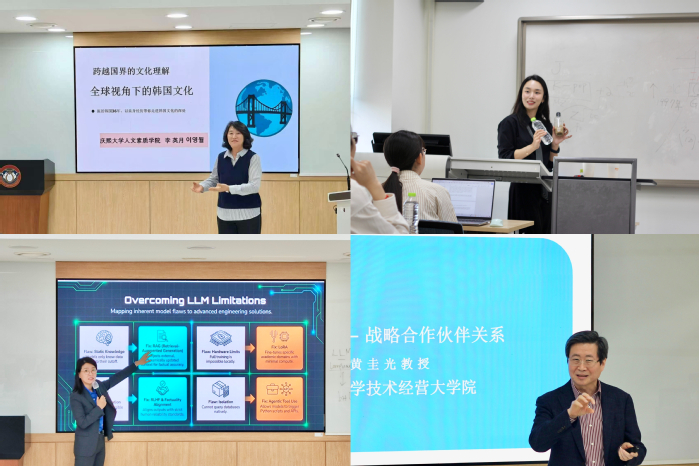
Special Lectures
Beyond theoretical learning, the delegation also visited industrial sites in South Korea to gain firsthand insights into the digital transformation and sustainable development practices of traditional manufacturing giants. At the Hyundai Motor Asan Plant, the delegation observed fully automated stamping, welding, and final assembly lines, witnessing the efficient assembly process from parts to finished vehicles. At the automotive brand exhibition hall, the display of the hydrogen fuel cell vehicle NEXO, along with simulation experiences such as AR driving and crash tests, provided students and faculty with a more intuitive understanding of clean energy and smart mobility. At the Samsung Innovation Museum, the delegation systematically explored cutting-edge achievements in semiconductors, artificial intelligence, and digital technologies, experiencing firsthand the profound impact of technological advancement on corporate transformation, industrial upgrading, and social progress through immersive exhibits.
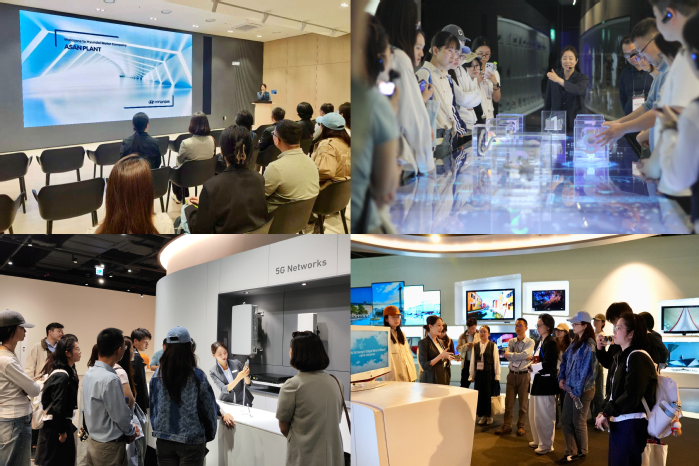
Company Visits
Cultural experiences offered another perspective for understanding Korean society. The delegation strolled through the Seoul campus of Kyung Hee University, often hailed as “the most beautiful campus in Korea,” visited the Korean Folk Village to observe traditional houses ranging from thatched cottages of commoners to tiled-roof homes of the aristocracy (yangban), and toured Hwaseong Fortress (Haenggung), where they appreciated the craftsmanship and spatial aesthetics of traditional East Asian wooden architecture amidst pine forests and stone paths, gaining a more nuanced understanding of the preservation and innovation of Korean culture.
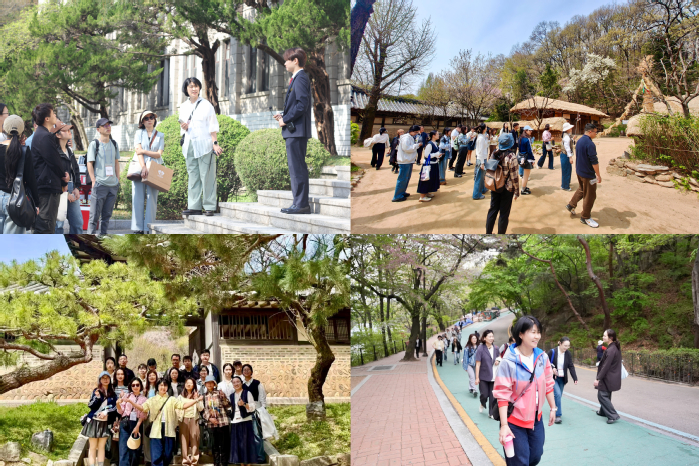
Cultural Experience
This study visit to South Korea was not only an international academic exchange but also a close-up observation of enterprises, society, and culture in transition. At a critical time when USST is deepening comprehensive education reform, striving for “Double First-Class” construction, planning its “15th Five-Year Plan” development, and preparing for its 120th anniversary, the Business School will take this opportunity to fully implement a service- and contribution-oriented approach, persist in opening up education, actively expand practical cooperation with world-class institutions, enhance its international presence, stimulate students’ intrinsic motivation for growth, and continue to cultivate outstanding innovative talents with both patriotic commitment and a global vision.
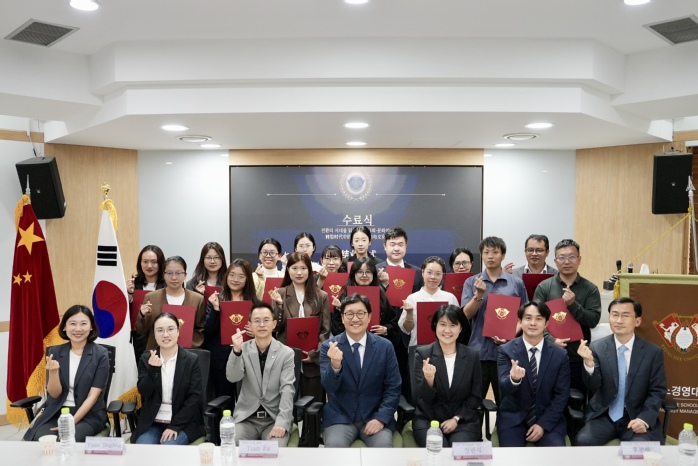
Group Photo at the Closing Ceremony
[Background]
Kyung Hee University, founded in 1949, is a prestigious private comprehensive university in South Korea, with campuses in Seoul, Suwon (Global Campus), and Gwangneung. In recent years, the university has achieved balanced development across the humanities, social sciences, science, and engineering. Its business school holds AACSB international accreditation, and its teaching quality is widely recognized. The Graduate School of Technology Management at Kyung Hee University offers multiple programs, including Business Management, Financial Management, and Sports Management, covering diverse fields of modern commercial society, and has become an important force in technology and management education in South Korea.
Translated by Zhu Hongyu
Reviewed by Liu Weiwei, Wei Xin