
On May 13, the Business School of the University of Shanghai for Science and Technology (USST) co-hosted a symposium with Shanghai Fenglin Healthcare Industry Development (Group) Co., Ltd. and Yuanhua Healthcare (Shanghai) Co., Ltd. on the joint establishment of an “AI + Healthcare” internship and training base and research commercialization platform. Attendees from the Business School included Dean Zhao Laijun, Vice Dean Fang Zhiming, Deputy Party Secretary Yan Jin, deputy Director of the Department of Artificial Intelligence Liu Yong, AI Undergraduate Program Director Liu Chen, and Associate Professor Yin Pei. The Fenglin International Group side was represented by Vice Chairman Chen Chao, Deputy Party Secretary Duan Mei, and Chen Jie (Deputy Director of Sub-district Office). Also participating were Qu Jian (Chairman of Fenglin Chamber of Commerce and President of HEALTH BioMed Group), Wen Deliang (CEO of Red Bear AI), and Tang Ming (General Manager of the Platform Division and East China Region, and Trade Union Chair of Yuanhua Healthcare), who led the core management team of Yuanhua Healthcare throughout the discussions.
The symposium focused on the joint development of the “AI + Healthcare” internship and training base and research commercialization platform by USST, Fenglin Group, and Yuanhua Healthcare. In-depth exchanges were held on core issues including the base’s functional positioning, university‑enterprise collaborative education, industry scenario integration, and research commercialization mechanisms. The goal is to serve Shanghai’s “3+6” industrial system, particularly the key sectors of artificial intelligence and life and health, promote high‑quality development of the “AI + healthcare” industry, and achieve the cooperation objectives of “complementary advantages, resource sharing, collaborative education, and mutual benefit.” The symposium is an important practice in response to the national strategy of “strengthening education,” and a key initiative by USST to advance comprehensive higher education reform and deepen the integration of industry and education as well as science and education.
Dean Zhao Laijun noted that USST has a strong engineering heritage and a clear application orientation. Relying on its disciplinary foundations in systems science, management science and engineering, and artificial intelligence, the Business School continuously deepens the integration of talent cultivation, scientific research, and industrial needs. As a demonstration site for comprehensive higher education reform among Shanghai municipal universities, USST is vigorously advancing education reform and attaches great importance to the “AI + Healthcare” internship and training base, supporting it as a key platform to serve the regional life and health industry, cultivate interdisciplinary AI talent, and facilitate research commercialization. The university actively explores new paths for university‑enterprise collaboration and industry‑university‑research synergy.
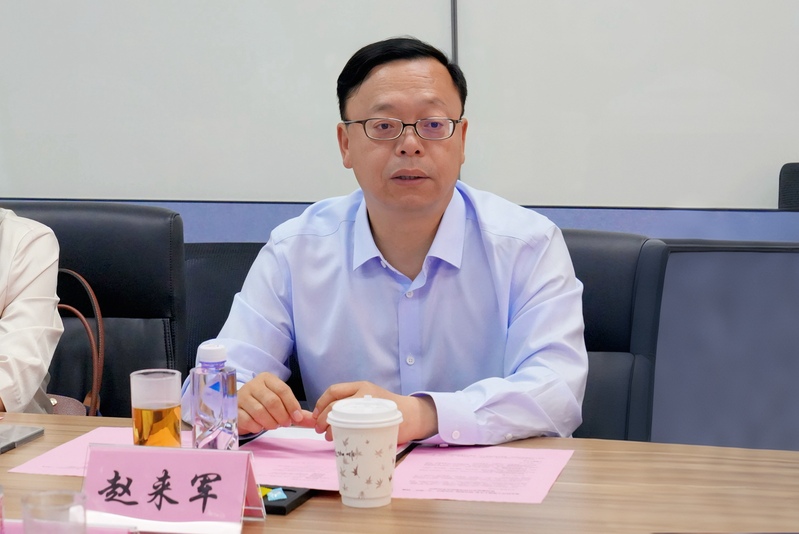
Speech by Zhao Laijun
Liu Yong provided a special report on the AI undergraduate program at the Business School. He stated that the AI program, guided by the training objective of “understanding algorithms, mastering models, and enabling applications,” has built distinctive strengths in areas such as emergency management, intelligent manufacturing, smart transportation, and health management.
Chen Chao gave a detailed introduction to Fenglin Group’s overall profile and industrial layout. He pointed out that the Fenglin functional zone continuously gathers life and health industry resources and innovation platforms, striving to transform the resource advantages of “large enterprises, universities, major institutions, and leading experts” into developmental advantages of “original innovation + clinical translation + industrial clustering.” The Fenglin Incubation Center, as a high‑quality incubator promoted by Xuhui District, has a solid foundation for effectively linking university talent cultivation with corporate application scenarios.
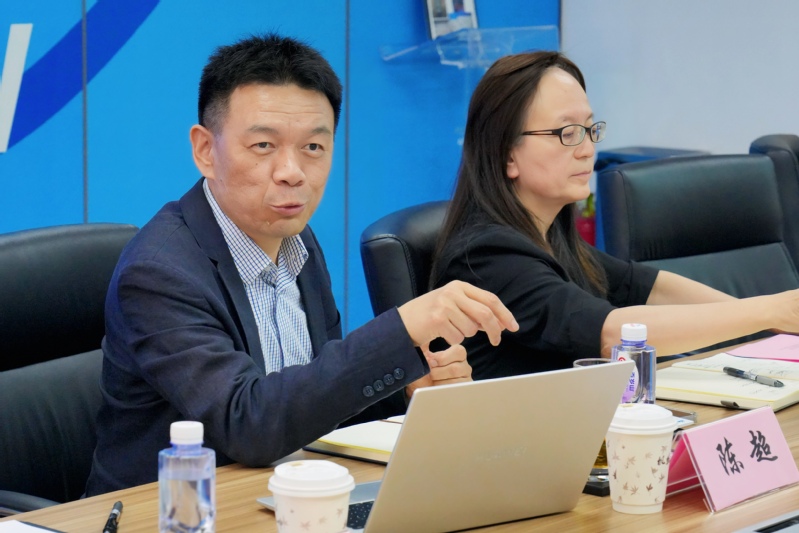
Speech by Chen Chao
Chen Jie introduced the supportive policies of Fenglin Sub-district Office for optimizing the business environment and promoting university‑community interaction. As a representative of the “one body, two wings” mechanism in the Fenglin area, Fenglin Group and the Sub-district Office will fully support the construction of the base and facilitate coordinated resources among the university, industrial park, sub-district, and enterprises.
Qu Jian introduced that HEALTH BioMed Group has been deeply engaged in the in vitro diagnostics and life and health industry for over two decades, consistently promoting the translation of hard technology achievements such as 3D bioprinting and precision medicine in the Fenglin area. Drawing on the Group’s long‑term development experience in Fenglin, he shared practical insights on promoting industry‑university‑research collaboration and research commercialization, providing valuable reference for deepening university‑enterprise cooperation.
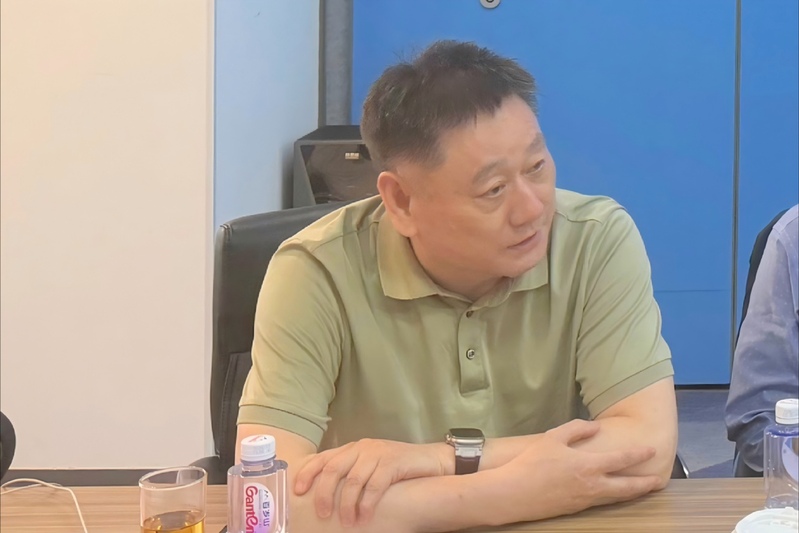
Speech by Qu Jian
Wen Deliang introduced the current development status of Red Bear AI and recent progress in large models, and offered perspectives and suggestions on future cooperation models in the construction of the internship and training base.
Building on the presentations from all parties, Tang Ming systematically outlined four core issues regarding the base construction: functional positioning of the base, deepening cooperation models, building a talent cultivation system, and prospects for industry‑university‑research collaboration. He proposed using “joint job design, co‑cultivation of mentors, co‑development of courses, and sharing of outcomes” as key levers, and called for in‑depth discussion of an “professor + student + industry mentor” model for integrated production‑education‑research, effectively advancing the symposium’s discussions.
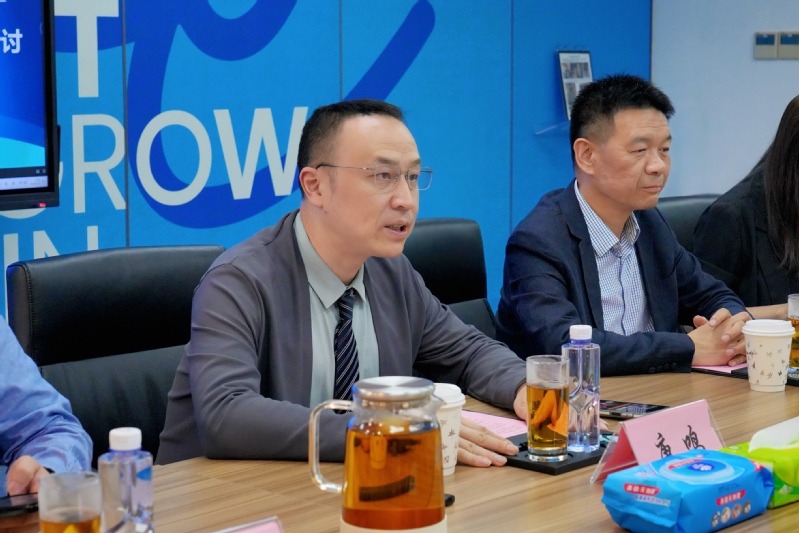
Speech by Tang Ming
Vice Dean Fang Zhiming pointed out that the Business School will deepen the concept of “real problems, real solutions.” Through its Industry‑Education Integration Office, the School will transform real corporate problems into course projects and graduation design topics, and promote university‑enterprise co‑developed courses and the establishment of innovation and entrepreneurship modules.
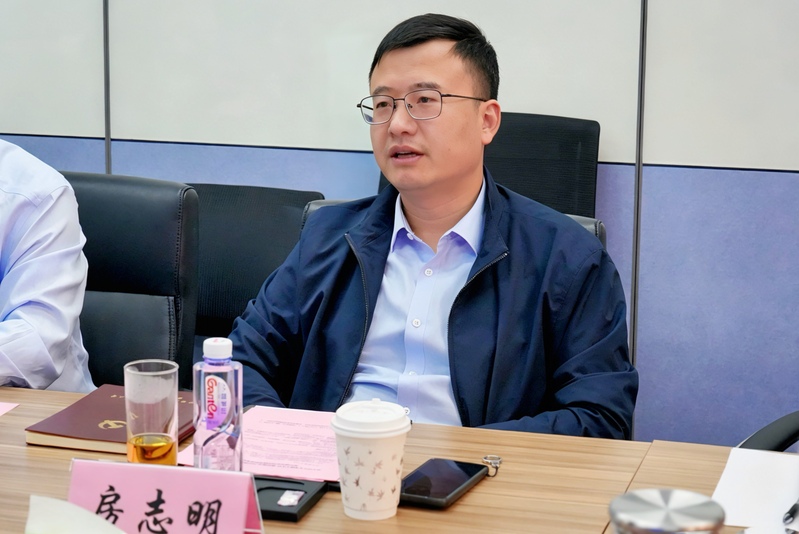
Speech by Fang Zhiming
Deputy Party Secretary Yan Jin suggested bringing industry mentors into the classroom, inviting senior executives to provide career planning guidance, leveraging the incubator to support student innovation and entrepreneurship, and offering opportunities for young faculty to take temporary positions in enterprises, thereby aligning teaching and research with industry applications.
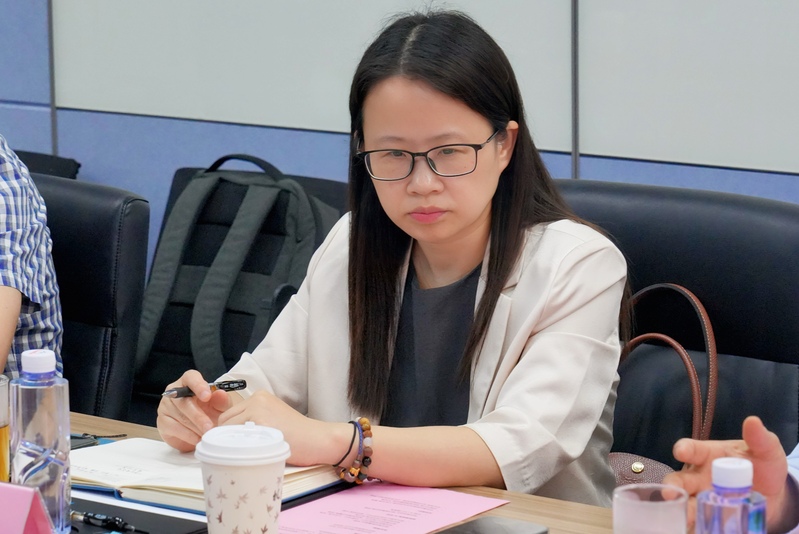
Speech by Yan Jin
Liu Chen noted that the School is adjusting its AI training program in response to comprehensive reform needs, and welcomes in‑depth participation from enterprises to jointly build a new talent cultivation framework that “educates for industry, serves science, and integrates industry and education.”
After thorough discussions, all parties clarified the functional positioning of the training base as a core platform for talent cultivation, practical teaching, research cooperation, and outcome commercialization. Regarding research commercialization mechanisms, they proposed building a full‑chain ecosystem of “practical teaching – outcome translation – industrial incubation.” Broad consensus was reached on co‑establishing the “AI + Healthcare” internship and training base, creating job matching mechanisms, promoting joint supervision and research collaboration, and facilitating efficient translation of research outcomes. These agreements set the direction and solidify the foundation for deepening industry‑education‑research integration.
During the symposium, participants also visited the Xuhui District Life and Health Industry Exhibition Hall, gaining hands‑on understanding of the layout, innovation platform development, and representative scientific and technological achievements in the Xuhui Fenglin life and health industry. They were deeply impressed by the industrial depth and vitality of this 2.69‑square‑kilometer area with the highest concentration of innovation.
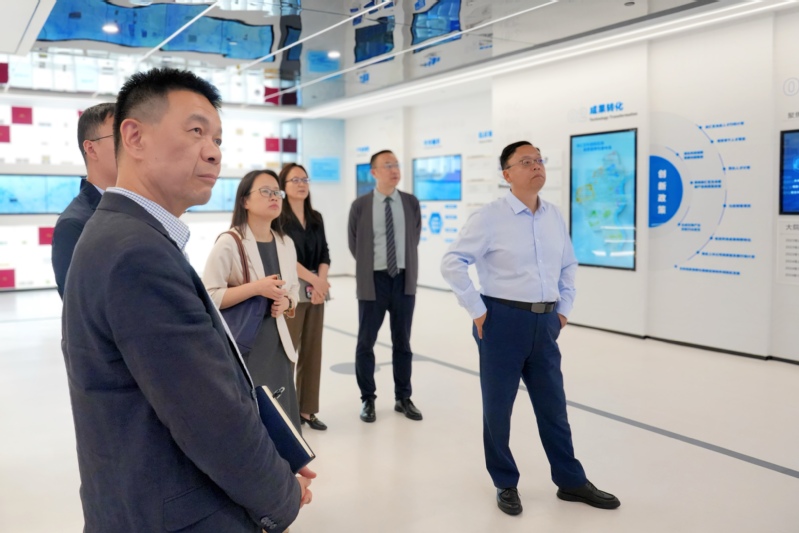
Site Visit
This symposium marks an important milestone in the deepening strategic cooperation among the three parties. Moving forward, the Business School of USST will continue to deepen collaboration with Fenglin Group, Yuanhua Healthcare, and related enterprises. Through the “government‑university‑enterprise‑business” four‑party linkage, they will actively explore new models of industry‑education‑research integration, jointly serve the key areas of artificial intelligence and life and health within Shanghai’s “3+6” industrial system, contribute to building Shanghai into an innovation highland for the “AI + life and health” industry, and make positive contributions to the university’s comprehensive higher education reform and high‑quality regional industrial development.
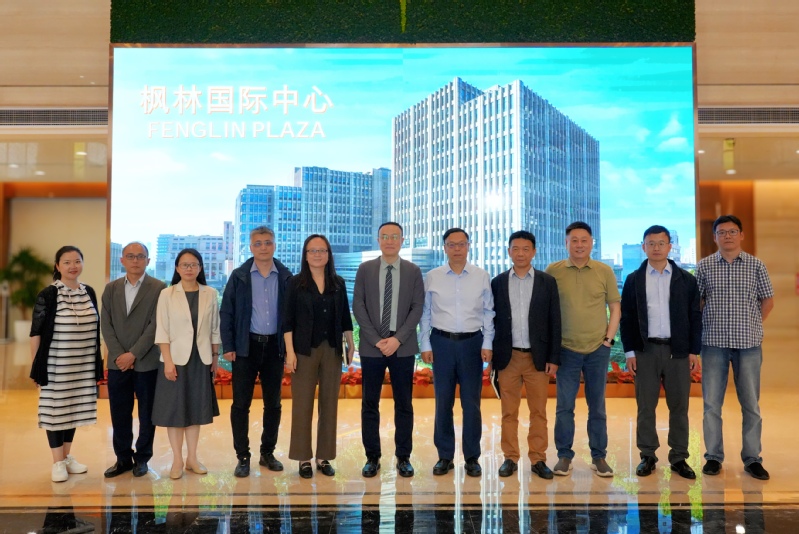
Group Photo
Translated by Gai Lin
Reviewed by Liu Weiwei, Wei Xin