
From August 25 to September 1, a delegation composed of Zhu Shuicheng, Director of the Department of Public Administration at the Business School, along with faculty representatives Cao Jing, Chen Xiaoxiao, and Qi Xiang, visited Switzerland and France. The purpose of the visit was to investigate the models of application-oriented universities and the practical experience of industry-education integration, as well as to learn from advanced practices in European applied higher education and to promote the internationalization of higher education.
The delegation first visited the University of Applied Sciences and Arts Northwestern Switzerland (FHNW). FHNW is renowned for its application-oriented, industry-education integrated approach and is a typical representative of applied higher education in Europe. The delegation had in-depth discussions with Isabel, a faculty member of the FHNW School of Social Work. Isabel, who holds educational backgrounds from Austria, Germany, and China, and studied at East China Normal University for one year, shared her insights on the characteristics of application-oriented universities in different countries, including their positioning, curriculum design and industry-education integration. The delegation focused on the applied talent cultivation program design, practical teaching system construction, and school-enterprise collaborative education mechanisms. Discussions also covered topics such as interdisciplinary development in public administration and social work, as well as overseas internships for students.
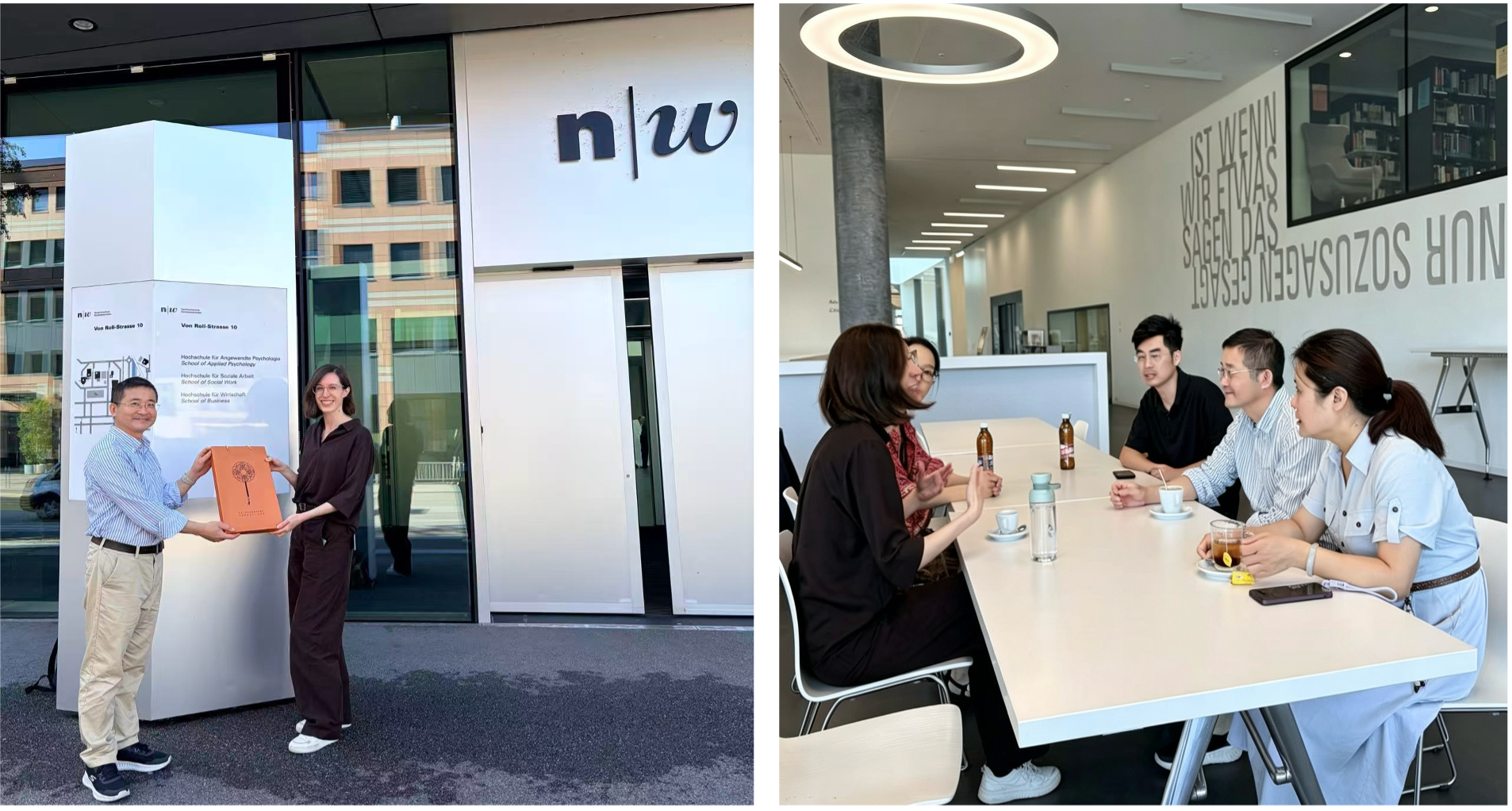
Visit to FHNW
Then the delegation visited the UZH Blockchain Center at the University of Zurich, where they held a meeting with research fellows. Drawing on the Swiss higher education system, the center's representatives highlighted the University of Zurich's experience in talent cultivation models, industry-education integration mechanisms, and the dual-system education approach. The two sides exchanged views on interdisciplinary construction in application-oriented universities, innovative postgraduate training, and case-based teaching.
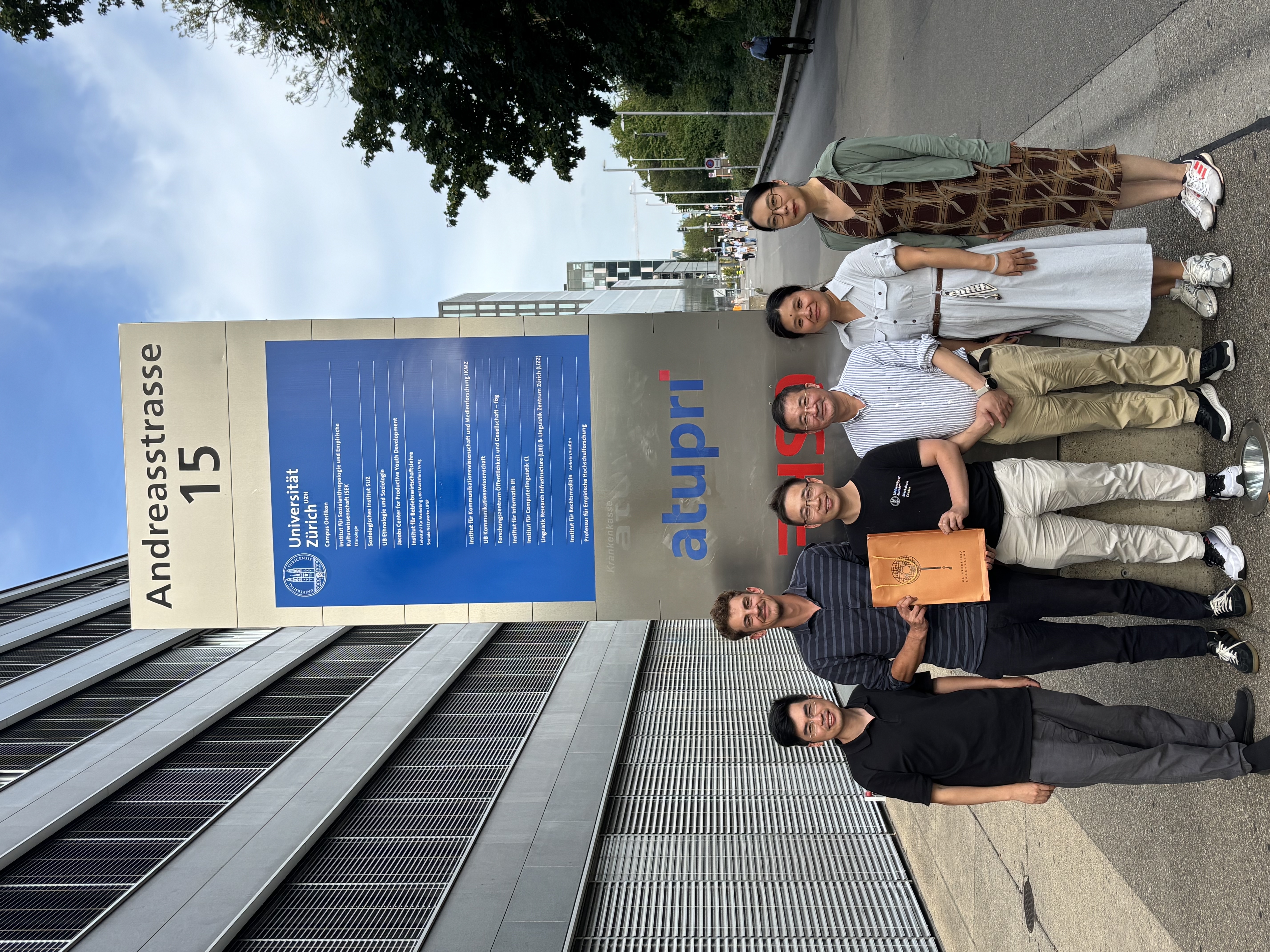
Visit to the UZH Blockchain Center
In France, the delegation first visited the École Supérieure des Métiers Artistiques (ESMA), a representative of applied arts education in France, known for its project-driven, workshop-based approach and industry-education integration. President Karim warmly received the delegation, with participation from Juliette, Director of International Affairs Office, and Charlotte, Head of Student Training. The two sides discussed innovations in interdisciplinary talent cultivation models at application-oriented universities, focusing on topics such as AI-empowered education and teaching, the integration of art design and public management, and student innovation practices.
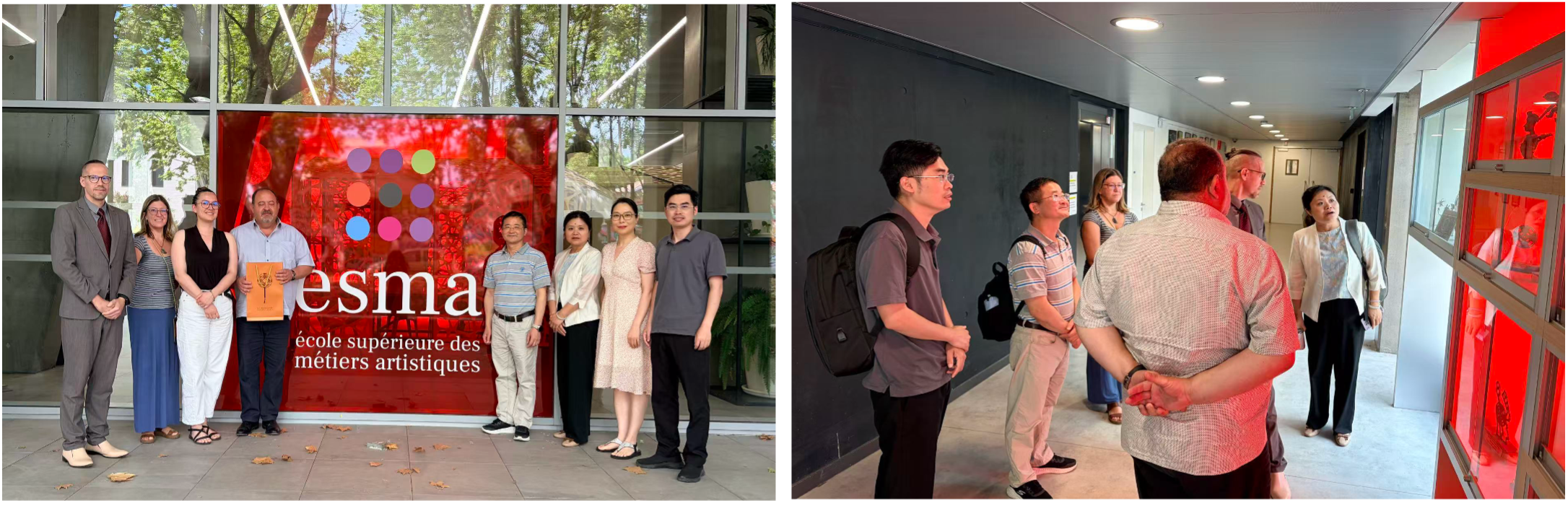
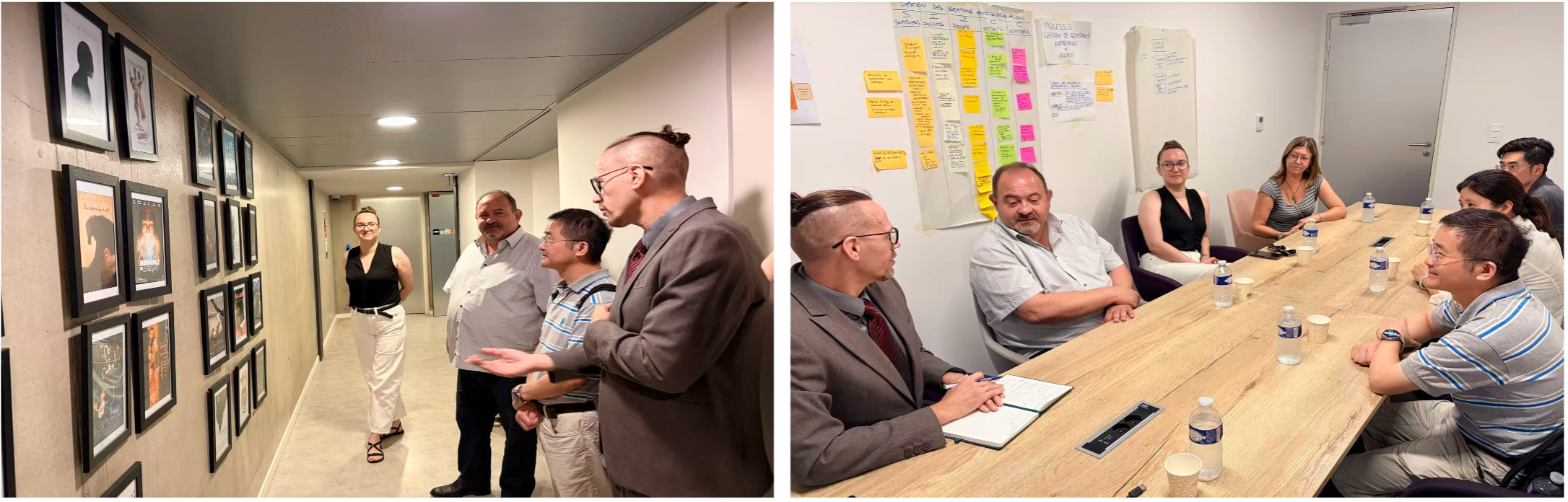
Visit to the École Supérieure des Métiers Artistiques (ESMA)
The delegation's final stop was TBS Education in Toulouse, one of the first business schools worldwide to hold the three major international accreditations: AACSB, EQUIS, and AMBA. The delegation met with Dr. Ramillon, Head of International Relations and Accreditation, Professor Bénaroya, Director of the International EMBA Program and Marketing Professor, and other faculty representatives. The two sides discussed topics such as applied business talent cultivation models and the construction of an innovation and entrepreneurship education ecosystem. TBS Education highly appreciated the Business School's exploration of engineering-management integration and industry-education collaborative education, and also shared its experience in applied business talent cultivation, innovation and entrepreneurship education, and international accreditation system.
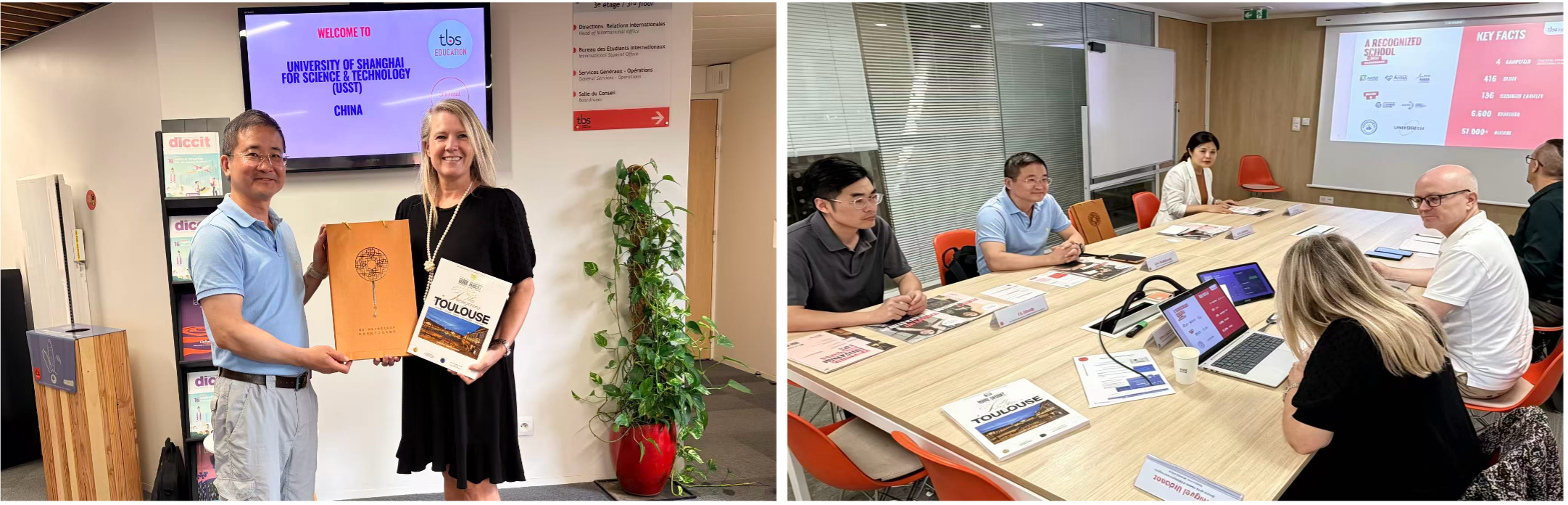
Visit to TBS Education in Toulouse
Through its visits to renowned universities and research institutions across Switzerland and France, the delegation gained valuable insights into advanced practices in application-oriented university. At the same time, it significantly expanded the School's collaborative network across Europe, which has laid a solid foundation for optimizing the School's internationalization strategy, enhancing the quality of its application-oriented programs, and strengthening its global influence.
Reviewed by Liu Weiwei