


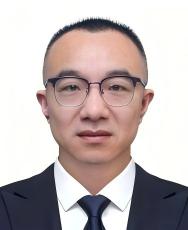
杨平乐
职称/职务:教授,博士生导师,硕士生导师
主要研究领域:复杂系统管理、智慧物流供应链管理、公共安全与应急治理、技术与数字治理、人工智能
电子邮箱:plyang@usst.edu.cn
办公室:经管大楼A楼817室
职称/职务:教授,博士生导师,硕士生导师
主要研究领域:复杂系统管理、智慧物流供应链管理、公共安全与应急治理、技术与数字治理、人工智能
电子邮箱:plyang@usst.edu.cn
办公室:经管大楼A楼817室
教育背景 博士,管理科学与工程,上海大学,2016-2020
学术经历 2024.6-至今,上海理工大学管理学院,教授 |
科研项目 1.国家自然科学基金委员会,国家自然科学基金面上项目,《人工智能驱动的多模态融合网络舆情扩散机理与协同管控策略研究》(课题编号:72574145),2026.01-2029.12,第二课题负责人. 2.全国哲学社会科学规划办公室,国家社会科学基金青年项目,《情感视角下基于生成式AI的人机协同决策优化机制研究》(课题编号:25CGL002),2025.10-2028.10,第二课题负责人. 3.上海市民政科学研究和国际交流中心委托项目,《关键群体的包容性韧性保障策略及路径研究》,2025.3-2025.9,核心参与人. 4.上海东方丝路多式联运有限公司委托项目,《中欧班列—“上海号”松江场站项目可行性研究》,2023.12-2024.12,核心参与人. 5.全国哲学社会科学规划办公室,国家社会科学基金一般项目,《基于社交媒体‘不实信息’的重大突发传染病事件辅助预警研究》(课题编号:21BGL217),2021.10-2024.10,课题负责人. 6.上海市科学技术委员会,上海市科技创新行动计划软科学重点项目,《长三角区域降碳减污协同治理发展路径与对策研究》(课题编号:22692112200),2022.01-2023.01,课题负责人. 7.江苏省教育厅,江苏省高校自然科学研究面上项目,《非经典量子计算模型的计算能力与安全性若干问题》(课题编号:16KJD520002),2016.09-2018.09,课题负责人. 8.张家港市科学技术局,张家港市科技计划项目,《张家港市乡村民宿服务质量提升研究》(课题编号:ZKR1904),2019.12-2020.12,课题负责人. 9.张家港市科学技术局,张家港市科技计划项目,《乡村旅游转型升级背景下的张家港民宿发展研究》(课题编号:ZKR1702),2017.12-2018.12,课题负责人. 10.张家港市科学技术局,张家港市级社科应用研究课题,《大数据时代智慧城市建设路径研究》(课题编号:2017B18),2016.12-2017.12,课题负责人. 11.张家港香樟树众创空间创业培育重点项目,《“智慧•平安”智能车载鹰眼安全系统》,2017.10-2018.10,课题负责人. 12.国家自然科学基金委员会,国家自然科学基金面上项目,《高维可积模型及特殊解的机械化算法研究》(课题编号:11871328),2019.01-2022.12,核心参与人. 13.江苏省科学技术厅,江苏省科技计划项目(重点研发计划社会发展),《张家港市金港镇德丰“智慧•减灾•平安”科技社区建设》(课题编号:BE2014653),2014.06-2016.06,第二课题负责人. 14.上海市科学技术委员会,上海市科技创新行动计划软科学项目,《大型社会活动人群密集风险预估及应急管理的创新研究》(课题编号:17692104500),2017.05-2018.05,核心参与人. 15.上海市人民政府发展研究中心,上海市人民政府决策咨询研究重点课题,《上海安全韧性城市建设的思路和对策研究》(课题编号:2021-A-033-A),核心参与人. 16.上海市人民政府发展研究中心,上海市决策咨询自贸区专项项目,《上海自贸试验区统计指标体系研究》(课题编号:2017-Z-T07),2017.06-2018.09,核心参与人. 17.上海市人民政府发展研究中心,上海市决策咨询浦东专项项目,《国际组织在上海设立问题研究》(课题编号:2017-Z-K23),2017.12-2018.12,核心参与人. 18.镇江市科学技术局,镇江市重点研发计划项目,《建筑震灾情景下基于智能体模型的地震应急疏散技术研究与应用》(课题编号:SH2019024),2019.07-2021.6,第二课题负责人. 19.张家港市科学技术局,张家港市科技计划项目,《金港镇德丰社区科技社区建设》(课题编号:ZKS1303),2013.09-2015.09,第二课题负责人. 教改项目 1.上海理工大学高等教育科学研究课题,《产教融合教学共同体构建及评价体系的研究与实践》(课题编号:JGXM251265),2025.09-2027.08,课题负责人. 2.教育部教育管理信息中心,“MOOCs视野下信息技术与学科教学深度融合的案例研究”项目,《MOOCs趋势下大学计算机基础教学的研究实践》教学改革研究, 2014.09-2015.09,课题负责人. 3.“十二五”江苏省高等学校重点教材(新编),《大学计算机基础学习指导》教材建设,2015.06-2017.06,第二课题负责人. 学术专著 1.杨平乐 李惠永著, 《神经网络算法研究及其在模式识别中的应用》, 延边大学出版社, ISBN:978-7-230-09162-6,中国国家版本馆 CIP 数据核字第 2025D3S554号, 字数: 246千字, 2025年9月第1版. 2.杨平乐著, 《神经网络算法研究及其在模式识别中的应用》, 中国矿业大学出版社, ISBN:978-7-5646-2983-0, 中国版本图书馆CIP数据核字第010985号, 字数: 112千字, 2016年11月第1版. 出版教材 1.出版教材, 《新兴技术与应急管理》, 延边大学出版社, 2025.9. ISBN: 978-7-2300-9107-7, 第四主编. 2.出版教材, 《计算机基础导论》, 中国矿业大学出版社, 2024.3, ISBN: 978-7-5646-6174-8, 第一主编. 3.出版教材, 《Office高级应用教程》, 上海交通大学出版社, 2018.4, 第二版, ISBN: 978-7-313-17851-0, 副主编. 4.出版教材, 《Web项目开发实践教程》, 清华大学出版社, 2017.1, ISBN: 978-7-302-45547-9, 2017.1, 第一副主编. 5.江苏省重点教材, 《大学计算机基础学习指导》, 中国矿业大学出版社, 2016.5, ISBN: 978-7-5646-3122-2, 第二主编. 6.出版教材, 《二级Visual C++考点题解与试卷汇编》, 中国矿业大学出版社, ISBN: 978-7-5646-3236-6 2016.8, 副主编. 7.出版教材, 《计算机二级联考复习指南》, 中国矿业大学出版社, 2015.1, ISBN: 978-7-5646-2763-8, 第二主编. 8.出版教材, 《VC++程序设计深度解析与指导》, 中国矿业大学出版社, 2014.1, ISBN: 978-7-5646-2142-1, 第一主编. 9.出版教材, 《计算机程序设计学习指南》, 苏州大学出版社, 2012.6, 第二主编. 学术论文 在Computers and Operations Research、Transportation Research Part E、Expert Systems with Applications、Chaos, Solitons and Fractals、Chaos、Information Sciences等复杂系统领域国内外权威学术期刊上累计发表学术论文60余篇,其中第一作者/通讯作者论文近20篇,SCI/SSCI检索论文30余篇。部分代表性论文如下: 1.Zhang Yi-Qi, Zhang Jian-Lin, Liu Yan-Ni, Cui Long-Qing, Wu Rui-Rui, Yang Ping-Le, & Meng Fan-Yuan. A dual-threshold cascading failure model in higher-order networks[J]. Chaos, Solitons & Fractals, 2026, 211: 118768. ISSN = {0960-0779}, WOS:001823492800001 2.Yang Ping-Le#, Zhao Lai-Jun, Meng Fan-Yuan, Li Hui-Yong, Zhou Li-Xin & Dong Chen*. MADS-UC: Finding Key Users in Online Social Networks Through Users Activation Activeness and Combination Weighting MCDM[J]. Concurrency and Computation: Practice and Experience, 2026, 38(3): e70566. ISSN = {0925-2312}, WOS:001685185600008 3.Wang Ya-Lin, Zhang Jian-Lin, Yang Ping-Le, Meng Fan-Yuan. Information cascades in signed hypergraphs[J]. Physica A: Statistical Mechanics and its Applications, 2026: 131543. ISSN = {0378-4371}, WOS:001737937100001 4.Zhao Lai-Jun#, Chang Han, Yang Ping-Le*, Li Hui-Yong, & Zhou Li-Xin. Detecting multiple rumor sources in social networks with topological potential and user behavioral attributes[J]. Expert Systems With Applications, 2026, 331: 133137. ISSN = {0957-4174}, WOS:001797037300001 5.Dong Chen#, Yang Ping-Le*, Wang Houcai, Yu, Xuelong. CBFSIM: A community-based four-stage framework for identifying influential spreaders in social networks[J]. Neurocomputing, 2026, 680: 133165. ISSN = {0925-2312}, WOS:001719605900001 6.Zhao Lai-Jun#, Xie Wei-Jie, Li Hui-Yong, Wu Chang-ZHi, Sun Shuo, Yang Ping-Le, & Zhou, Li-Xin. A p-Robust Location-Allocation model for Resilience-Oriented collaborative emergency response network in urban agglomerations[J]. Transportation Research Part E: Logistics and Transportation Review, 2026, 208: 104698. 7.Zhao Lai-Jun#, Chen Lu-Ping, Yang Ping-Le*, Li Hui-Yong, Zhou Li-Xin, & Chang Han. A swarm intelligence-based vaccination strategy for preventing epidemic spreading[J]. Applied Soft Computing, 2025, 181: 113413. ISSN = {1568-4946}, WOS:001566299400001 8.Zhao Lai-Jun#, Chen Lu-Ping, Yang Ping-Le*, Meng Fan-Yuan, Dong Chen. Coupled dynamics of information diffusion and disease transmission considering vaccination and time-varying forgetting probability[J]. Chinese Physics B, 2025, 34: 118701. ISSN = {1674-1056}, WOS:001626319800001 9.Lu Zhi #, Gao Jian, Hao Jin-Kao, Yang Ping-Le, Zhou Li-Xin. Learning driven three-phase search for the maximum independent union of cliques problem[J]. Computers & Operations Research, 2024, 164: 106549. (SCI) ISSN = {0305-0548}, WOS:001171289900001 10.Yang Ping-Le#, Zhao Lai-Jun*, Lu Zhi, Zhou Li-Xin, Meng Fan-Yuan, & Qian Ying. A new community-based algorithm based on a “peak-slope-valley” structure for influence maximization on social networks[J]. Chaos, Solitons & Fractals, 2023, 173: 113720. (SCI) ISSN = {0960-0779}, WOS:001038301100001 11.Yang Ping-Le#, Meng Fan-Yuan, Zhao Lai-Jun*, et al. AOGC: An improved gravity centrality based on an adaptive truncation radius and omni-channel paths for identifying key nodes in complex networks[J]. Chaos, Solitons & Fractals, 2023, 166: 112974. (SCI) ISSN = {0960-0779}, WOS:000992452300001 12.Yang Ping-Le#, Zhao Lai-Jun*, Dong Chen, Xu Gui-Qiong, and Zhou Li-Xin. AIGCrank: A new adaptive algorithm for identifying a set of influential spreaders in complex networks based on gravity centrality[J]. Chinese Physics B, 2023, 32, 058901. (SCI) ISSN = {1674-1056}, WOS:000987086700001 13.Dong Chen#, Xu Gui-Qiong*, Yang Ping-Le, & Meng Lei. TSIFIM: A three-stage iterative framework for influence maximization in complex networks[J]. Expert Systems with Applications, 2023, 212: 118702. (SCI) ISSN = {0957-4174}, WOS:000875503900009 14.Yang Ping-Le#, Yi Hong-Ru, Zhao Lai-Jun*, and Chen Lu-Ping. A two-stage hybrid model for determining the scopes and priorities of air pollution control [J]. Atmosphere, 2023, 14(5), 891. (SCI) EISSN = {2073-4433}, WOS:000994379200001 15.Zhou Li-Xin#, Zhang Zhen-Yu and Zhao, Lai-Jun and Yang, Ping-Le. Microblog sentiment analysis based on deep memory network with structural attention[J]. Complex & Intelligent Systems, 2023, 9(3): 3071-3083. (SCI) ISSN = {2199-4536}, WOS:000885217900002 16.Zhou Li-Xin#, Zhang Zhen-Yu, Zhao Lai-Jun, & Yang Ping-Le. Attention-based BiLSTM models for personality recognition from user-generated content. Information Sciences, 2022, 596, 460-471. (SCI) ISSN = {0020-0255}, WOS:000779447400008 17.Yi Hong-Ru#, Zhao Lai-Jun, Qian Ying, Zhou Li-Xin, & Yang Ping-Le. How to achieve synergy between carbon dioxide mitigation and air pollution control? Evidence from China. Sustainable Cities and Society, 2022, 78, 103609. (SSCI/SCI) ISSN = {2210-6707}, WOS:000734475700002 18.Dong Chen#, Xu Gui-Qiong*, Meng Lei, & Yang Ping-Le. CPR-TOPSIS: A novel algorithm for finding influential nodes in complex networks based on communication probability and relative entropy. Physica A, 2022, 127797. (SCI) ISSN = {0378-4371}, WOS:000864174500012 19.Zhao Lai-Jun#, Wang Yu, Zhang Hong-Hao, Qian Ying, Yang Ping-Le, & Zhou Li-Xin. Diverse spillover effects of COVID-19 control measures on air quality improvement: evidence from typical Chinese cities. Environment, Development and Sustainability, 2022, 1-25. (SCI) ISSN = {1387-585X}, WOS:000786563800001 20.Zhao Lai-Jun#, Zhou Yi, Qian Ying, Yang Ping-Le, & Zhou Li-Xin. A novel assessment framework for improving air quality monitoring network layout. Journal of the Air & Waste Management Association, 2022, 72(4), 346-360. (SCI) ISSN = {1096-2247}, WOS:000755500800001 21.Zhao Lai-Jun#, Zhou Jin-Peng, Li Hui-Yong, Yang Ping-Le, & Zhou Li-Xin. Optimizing the design of an intra-city metro logistics system based on a hub-and-spoke network model[J]. Tunneling and Underground Space Technology, 2021, 116: 104086. (SCI) ISSN = {0886-7798}, WOS:000685629400001 22.Zhou Li-Xin#, Zhang Zhen-Yu, Zhao Lai-Jun, & Yang Ping-Le. How user personality and information characteristics influence the creative information quality on open innovation platforms: an elaboration likelihood model[J]. KYBERNETES, 2021, 30(1). (SCI) ISSN = {0368-492X}, WOS:000669621100001 23.Xu Gui-Qiong#, Meng Lei, Tu Deng-Qin, & Yang Ping-Le. LCH: a local clustering h-index centrality measure for identifying and ranking influential nodes in complex networks[J]. Chinese Physics B, 2021, 30(8), 088901. (SCI) ISSN = {1674-1056}, WOS:000679088900001 24.Yang Ping-Le #, Xu Gui-Qiong*, Yu Qin, and Guo Jia-Wen. An adaptive heuristic clustering algorithm for influence maximization in complex networks[J]. Chaos. 2020, 30(09): 093106. (SCI) ISSN = {1054-1500}, WOS:000568823200006 25.Xu Gui-Qiong#, Guo Jia-Wen, Yang Ping-Le*. TNS-LPA: An Improved Label Propagation Algorithm for Community Detection Based on Two-Level Neighbourhood Similarity[J]. IEEE Access, 2020, 9(01), 23526-23536. (SSCI/SCI, 通讯作者) ISSN = {2169-3536}, WOS:000617369200001 26.Yang Ping-Le#, Liu Xin, and Xu Gui-Qiong*. An extended clustering method using H-index and minimum distance for searching multiple key spreaders[J]. International Journal of Modern Physics C. 2019, 30(07): 1940008. (SSCI/SCI) WOS:000481900000009 27.Zhou Ta#, Yang Ping-Le, Wang Si-Fan et al. Strong internal cohesion polymerization based integrated fuzzy classification on feature diffusion for epileptic electroencephalograms signal[J]. Journal of Medical Imaging and Health Informatics. 2019, 9 (3): 450-455. (SCI). ISSN = {2156-7018}, WOS:000460922300007 28.Yang Ping-Le#, Liu Xin, Xu Gui-Qiong*. A dynamic weighted TOPSIS method for identifying influential nodes in complex networks[J]. Modern Physics Letters B. 2018;32(19), 1850216. (SSCI/SCI) WOS:000438224000008 29.Yang Ping-Le#, Xu Gui-Qiong*, Chen Hui-Ping. Multi-attribute ranking method for identifying key nodes in complex networks based on GRA[J]. International Journal of Modern Physics B. 2018;32(32), 1850363. (SSCI/SCI) WOS:000457239100012 30.Zhou Ta#, Yang Ping-Le. Pattern classification of epileptic electroencephalograms signal based on improved feature extraction method[J]. Journal of Medical Imaging and Health Informatics. 2018, 8(1): 94-97. (SCI). ISSN = {2156-7018}, WOS:000422616500018 31.Zhou Ta#, Tang Li, Yang Ping-Le. Classification of epileptic electroencephalograms signal based on improved extreme learning machine[J]. Journal of Medical Imaging and Health Informatics. 2018, 8(1): 33–37. (SCI). ISSN = {2156-7018}, WOS:000422616500007 32.Zhang Cai#, Situ Hao-Zhen, Huang Qiong, Yang Ping-Le*. Multi-party quantum summation without a trusted third party based on single particles[J], International Journal of Quantum Information,2017, 15(02), 1750010. (SCI, 通讯作者). ISSN = {0219-7499}, WOS:000395940900002 发明专利 1.中国发明专利,一种基于机器视觉规划路径的多层泊车系统,第1发明人,2020/11/03 授权,CN202010594662.1 2.中国发明专利,一种具有雨水收集功能的屋檐钢构件的加工生产线,第1发明人,2020/11/10 授权,CN202010474588.X 3.中国发明专利,一种垃圾收集装置及采用其的大数据垃圾分类管理系统,第1发明人,2019/11/05 授权,CN201910854885.4 获奖 1.江苏省教育厅, 江苏省教育教学与研究成果奖(研究类)高校自然科学研究类(三等奖), 多领域大规模样本驱动下模糊随机性层次建模方法与研究, 排名2/5, 2018. 2.江苏省科学技术协会, 江苏省科技创新发明奖(三等奖), 水下视觉SLAM系统中的图像处理方法, 排名2/4, 2018. |
本科生课程 1.人工智能基础 2.人工智能与公共安全 3.管理研究方法论 4.科研项目课程 研究生课程 1.运筹学 2.博弈论基础及其应用 |
中国系统工程学会教育系统工程专业委员会 副秘书长 上海市人民政府决策咨询上海理工大学研究基地 秘书 上海高校智库“上海城市安全运行与应急治理协同创新中心” 秘书 |
个人荣获2025年度上海理工大学管理学院教学贡献奖 团队“超大型城市智慧应急青年团队”荣获2025年度上海理工大学青年五四奖章 |
